Amazon Fake Products in 2026: How to Spot and Avoid Them

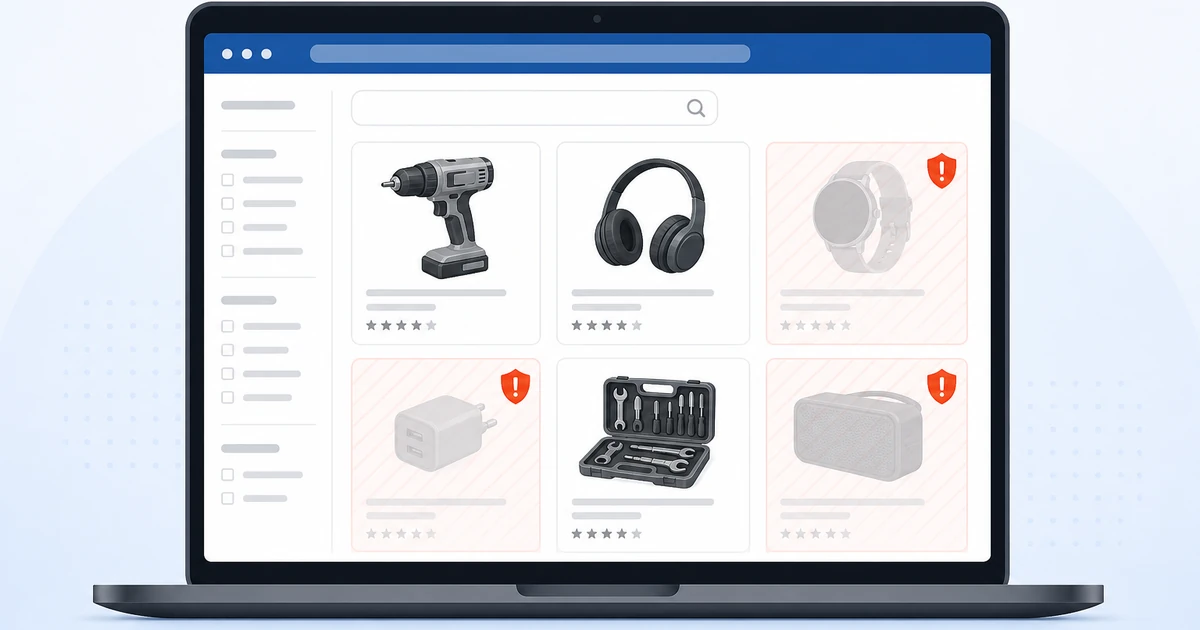
Fake products on Amazon are worse than ever in 2026, and telling a real one from a knockoff has become a real security skill.
TL;DR: Amazon seized 15 million counterfeit items in 2025 per its own Trustworthy Shopping Experience Report as covered by GeekWire, and the flood keeps coming. Commingled inventory, shell brands with random letters like SUNHZMCKP and ROTTOGOON, AI-generated product listings, and pay-to-play search placement all push fake products in front of real shoppers. This guide covers why fakes exist, the red flags to check before you click Buy, and a free browser extension called Knockoff that filters sketchy brands out of your search results automatically.
Jump to a section:
- How bad is the fake-product problem on Amazon in 2026?
- Why are there so many counterfeits on Amazon?
- How do you tell if an Amazon product is real?
- What are the highest-risk product categories?
- What is the Knockoff browser extension?
- What other tools filter fake Amazon brands?
- What should you do if you got a fake product from Amazon?
- Frequently asked questions
You search Amazon for a basic tool. A screwdriver. A phone charger. A pair of kitchen scissors. The first twenty results are all products from brands you have never heard of, with names like random keyboard smashes. Half of them have thousands of five-star reviews written in stilted English. Your gut says something is off.
Your gut is right.
The developer Josh Pigford had the same reaction last week. His weed trimmer would not start, and every search for a replacement tool returned brands like SUNHZMCKP and EHEYCIGA. That weekend he built Knockoff, a free browser extension that grays out listings from suspicious brands. It went viral within days because it named a problem every Amazon shopper had been quietly living with. This post walks through why the problem is that bad, how to spot fakes yourself, and how to filter them out.
How bad is the fake-product problem on Amazon in 2026?
Direct answer: Amazon seized over 15 million counterfeit products in 2025, and independent investigations by WIRED, NPR, and The New York Times keep finding fakes in beauty, supplements, and electronics. Enforcement is not keeping pace with new listings.
Amazon’s own Counterfeit Crimes Unit FAQ confirms the size of the problem, and GeekWire’s April 2025 coverage of the Trustworthy Shopping Experience Report put the 2024 seizure count at more than 15 million items along with legal action against 32,000 bad actors. Those numbers sound impressive until you see the marketplace’s scale. Third-party sellers now account for over 60% of units sold on Amazon, and the platform lists hundreds of millions of individual items on any given day.
Reporters keep confirming the mismatch. WIRED documented how counterfeit beauty products on Amazon caused chemical burns and pimple-patch reactions. NPR published a shopper’s guide to spotting counterfeits with four core red flags. NYT Wirecutter’s investigation was blunt in its title: Welcome to the Era of Fake Products. CNBC’s video reporting toured Amazon’s Brooklyn seizure warehouse and still concluded the fakes are winning.
If the largest e-commerce platform on Earth needs a dedicated crime unit and law enforcement partnerships to hold the line, the honest read is that the platform itself has become a risk surface for the consumer.
Why are there so many counterfeits on Amazon?
Direct answer: Commingled inventory mixes real and fake items in the same warehouse bin, most items are sold by unvetted third parties, and pay-to-play search placement rewards new shell brands with instant visibility.
Three structural problems create the flood.
Commingled inventory. When multiple sellers offer the same item, Amazon groups those units together in the same warehouse bin. When you order from a specific seller, Amazon might ship you whichever unit is closest, including a counterfeit sent in by a different seller. The Reddit thread that popularized the term commingling is worth reading for the full mechanics. Amazon has adjusted the practice for some categories, but the pattern is embedded in how the FBA warehouse network operates.
Third-party seller sprawl. Most listings on Amazon are not sold by Amazon. They come from outside merchants, many of them based overseas, and the vetting process for new sellers is easy to game. A shell company registered in a jurisdiction with weak trademark enforcement will spin up a brand, list thousands of items, take orders for six months, absorb the customer complaints, then vanish and re-register under a new name.
Pay-to-play search. The FTC’s antitrust lawsuit against Amazon documented how sponsored placement, paid promotions, and ad slots crowd out organic results. That system favors brands with cash to spend on placement over brands with a reputation to protect. A new shell brand with a $50,000 ad budget outranks a legacy brand with a small marketing team. 404 Media summarized the FTC’s findings as evidence the platform has become “an algorithmic and financial race to the bottom.”
A fourth pattern is worth naming: AI-generated listings. Scammers now use large language models to write product descriptions, feature bullets, and even fake reviews at scale. Modern Retail’s reporting inside Amazon’s Counterfeit Crimes Unit confirmed that bad actors are using generative AI for reviews abuse specifically. If the copy on a listing sounds oddly perfect, oddly generic, or written for search engines instead of humans, that is the pattern to watch for.
How do you tell if an Amazon product is real?
Direct answer: Check the Sold By field, watch for random-letter brand names, verify the price against the manufacturer’s site, and scan reviews for repeated phrases or off-topic comments.
Use this checklist before you click Buy Now.
- Check the Sold By field. It should say Sold by [Brand Name] or Sold by Amazon.com. If it says Sold by SUNHZMCKP or a brand you have never heard of, treat the listing as suspect. Fulfilled by Amazon is not a verification badge, it only means Amazon ships the item.
- Watch for random-letter brand names. The Knockoff extension flags brand names based on consonant-to-vowel ratios, unusual clusters, and all-caps formatting. You get the same check by eye. Real brands tend to be pronounceable words or coherent phrases. Fake brands look like keyboard smashes: SUNHZMCKP, EHEYCIGA, ROTTOGOON, LU&MN, VISCOO, YOOJEE. If you cannot pronounce it, be suspicious.
- Cross-check the price. Open the manufacturer’s official website in a new tab. If the Amazon listing is more than 20 to 30% below the manufacturer’s price without a site-wide sale, the odds of a counterfeit spike sharply.
- Inspect the reviews for patterns. Real reviews mention specific product details. Fake review farms produce generic five-star comments, off-topic praise, or comments about a completely different product (a common tell that the seller hijacked a legitimate listing). A sudden burst of hundreds of five-star reviews within the same week is a strong signal.
- Reverse-image search the product photos. If the same product photos appear on dozens of unrelated listings with different brand names, someone is copying assets from a real brand.
- Look for verification badges. Amazon Premium Beauty, Amazon Renewed, and verified brand storefronts each apply stronger vetting than open marketplace listings. They are not perfect, but they cut the counterfeit rate meaningfully.
A sane rule of thumb: for anything that touches your body, your food, or your electrical outlets, buy from the brand’s own site or from a verified retailer even if Amazon is cheaper. The convenience premium is not worth a burn or a fried laptop.
What are the highest-risk product categories?
Direct answer: Beauty, supplements, phone chargers, and USB storage carry the highest real-world risk because a counterfeit in these categories will burn you, poison you, catch fire, or destroy your data.
Not all categories carry equal risk. Some fakes are annoying. Some are dangerous. The categories below deserve extra scrutiny.
| Category | Real risk | What to check |
|---|---|---|
| Beauty & skincare | Chemical burns, allergic reactions, contamination | Buy from Amazon Premium Beauty or the brand’s own storefront |
| Supplements & meds | Wrong dosage, unsafe fillers, no active ingredient | Verify sealed packaging and buy directly from the brand |
| Phone chargers & cables | Fire risk, battery damage, no over-current protection | Look for UL, USB-IF, or MFi certification on the packaging |
| USB drives & SD cards | Data loss, capacity fraud (a “1TB” drive with 32GB of real storage) | Buy from named brands and validate with the free H2testw utility |
| Apple accessories | Battery fires, device damage | Buy from Apple directly or an Apple Authorized Reseller |
| Books | Poor print quality, missing pages, unauthorized copies | Compare cover photos and page counts to the publisher’s listing |
The pattern is consistent. Categories where counterfeiting produces a plausible-looking product for a fraction of the manufacturing cost are the categories drawing the most fraud. If a real Apple charger costs Apple $10 to make and sells for $19, a counterfeit with no safety certification costs the shell factory $1 and still returns a 500% margin at $6. That math is why your search for “iPhone charger” returns thirty listings from brands you cannot pronounce.
What is the Knockoff browser extension?
Direct answer: Knockoff is a free Chrome and Firefox extension that hides, grays out, or filters listings from suspicious brands on Amazon, using name-pattern detection and a community-maintained brand list.
Knockoff was built in a weekend by developer Josh Pigford, who announced the project on X on July 8, 2026 after his own frustrating search for a lawn tool. The extension went viral inside 24 hours because it named a problem every Amazon user had internalized as normal.
The mechanics are simple. Knockoff scans product listings on Amazon and applies a filter to any brand it flags as suspicious. It flags brands based on name characteristics like consonant-to-vowel ratios, unusual letter clusters, all-caps formatting, and community reports. Users pick whether flagged listings get hidden completely, grayed out, or filtered out of search results. The extension also hides sponsored listings if you want the pay-to-play noise gone at the same time.
Four things worth knowing before you install it:
- It is free. No account, no upsell, no premium tier. As Pigford told 404 Media, “I stand to benefit nothing directly economically, it’s a nice little tool I wanted to make.”
- It runs locally. The extension does not send your browsing data to a server. The brand list and detection logic ship inside the extension itself.
- It is community-driven. Users report new sketchy brands and unflag ones that got caught by accident. The list evolves over time based on that feedback.
- It does not fix Amazon. It fixes what you see when you shop on Amazon. Sellers will still list fakes and other users will still see them. Think of it as a personal ad-block layer for counterfeit brands.
You install Knockoff from the Chrome Web Store or Firefox Add-ons page linked from knockoff.shopping. Standard permissions for an Amazon-scoped extension, no unusual asks.
What other tools filter fake Amazon brands?
Direct answer: AmazonBrandFilter, The Markup’s Amazon Brand Detector, and Fakespot each attack the problem from a different angle. Layer them if you want maximum coverage.
Knockoff is the newest and most-hyped option, but three other projects deserve a mention.
AmazonBrandFilter is a Chrome extension that lets you hide specific brands from search results. It is older, less automated, and needs more manual curation than Knockoff, but it works well if you already know the brands you want gone.
The Markup’s Amazon Brand Detector was built by an investigative newsroom to expose how Amazon’s own private-label brands (Amazon Basics, Solimo, Pinzon, and roughly 150 others) get preferential treatment in search. It highlights Amazon-owned brands on a search page rather than hiding them. The Markup’s launch post explains the reporting behind it.
Fakespot focuses on the review side. It analyzes review authenticity for a given product and gives it a grade. If a listing looks legitimate but the reviews are 90% fake, Fakespot will show it. The company was acquired by Mozilla in 2023 and now ships as a native feature of Firefox.
For the strictest setup, run Knockoff to hide the worst brand names, keep Fakespot handy for review checks, and buy from verified brand storefronts whenever the item touches your body or your outlet.
What should you do if you got a fake product from Amazon?
Direct answer: Stop using it, request a refund through Amazon’s Report Something Suspicious flow, alert the real manufacturer, and file a chargeback if Amazon stalls.
Take these steps in order.
- Stop using the item. Especially anything electrical, anything you put on your skin, or anything you would eat or drink. A fake charger that catches fire while you sleep is a different problem than a fake phone case that scratches easily.
- Contact Amazon customer service. Use the Report Something Suspicious flow inside your order details. Request a full refund and mark the return reason as counterfeit or not as described. Take clear photos of the packaging, product, and any identifying marks before you send it back.
- Alert the real brand. Reach out to the manufacturer through their support page. Legitimate brands care about fakes because those fakes damage their reputation and their sales. Some brands run active anti-counterfeit programs and will pursue the seller through Amazon on your behalf.
- File a chargeback if Amazon stalls. If Amazon refuses the refund or delays past a reasonable window, call your card issuer and file a chargeback for item not as described. Card issuers side with the buyer in almost all counterfeit disputes when you have photos.
- Leave an honest review. Do it on the specific listing, not on the brand as a whole (the brand often gets renamed or delisted anyway). A specific review saying “product arrived in unsealed packaging, logo was misaligned, this is a counterfeit” helps the next person read the listing correctly.
If the counterfeit caused physical harm, escalate. File a complaint with the FTC at reportfraud.ftc.gov and, for consumer-product safety hazards, notify the Consumer Product Safety Commission. Both agencies use consumer complaints as inputs to enforcement priorities.
The bottom line on Amazon fake products in 2026
Amazon’s counterfeit problem is a supply-chain security issue at consumer scale. Every purchase from a random-letter shell brand teaches the ranking algorithm the brand deserves more placement. Every purchase you skip in favor of a verified seller teaches it the opposite.
Filter aggressively. Cross-check often. Treat a brand name like SUNHZMCKP the same way you treat an email from a bank you don’t have an account with.
The underlying skill set here is the same one that keeps your accounts safe from phishing and your data safe from breaches. If you want the highest-leverage move on your own accounts, two-factor authentication stops 99% of automated account attacks, and our cybersecurity career guide covers why this kind of consumer-side security thinking is now a job market on its own. Fake products, fake reviews, and fake brands are the same class of problem as fake emails and fake domains. The tools differ. The mindset stays the same.
Frequently asked questions
Are there really fake products sold on Amazon?
Yes. Amazon seized over 15 million counterfeit items in 2025 according to GeekWire’s coverage of the Trustworthy Shopping Experience Report. Independent reporting by WIRED, NPR, and NYT Wirecutter has documented widespread counterfeits in beauty, supplements, electronics, and storage devices. Enforcement removes listings faster than ever, and new fake listings keep outpacing it.
How do I know if an Amazon product is real?
Check the Sold By field on the listing and avoid random-letter brand names. Compare the price to the manufacturer’s own website. Scan reviews for repeated phrases or off-topic comments. Verified brand storefronts, Amazon Renewed, and Amazon Premium Beauty are safer starting points than open search results, especially for beauty, supplements, and electronics.
Why are there so many counterfeits on Amazon?
Three structural reasons. Commingled inventory mixes real and fake items from different sellers in the same warehouse bin. Most items are sold by unvetted third parties, not Amazon itself. And Amazon search results are pay-to-play, so fly-by-night brands buy their way to the top faster than enforcement removes them.
How do you avoid buying fake products on Amazon?
Buy from the brand’s own storefront when possible, verify the seller is the brand or Amazon itself, and cross-check prices against the manufacturer’s site. Install a filter like the free Knockoff browser extension to hide listings from suspicious brands automatically. For high-risk items like chargers and supplements, buy direct from the manufacturer.
What should I do if I received a fake product from Amazon?
Stop using the item, especially electronics or skincare. Return it through Amazon’s Report Something Suspicious flow for a full refund. Alert the real manufacturer so they know to pursue the seller. If the item caused harm or if Amazon refuses the refund, file a chargeback with your card issuer and document photos and packaging before returning.