Government Data Breach: What the Pentagon Leak Exposes

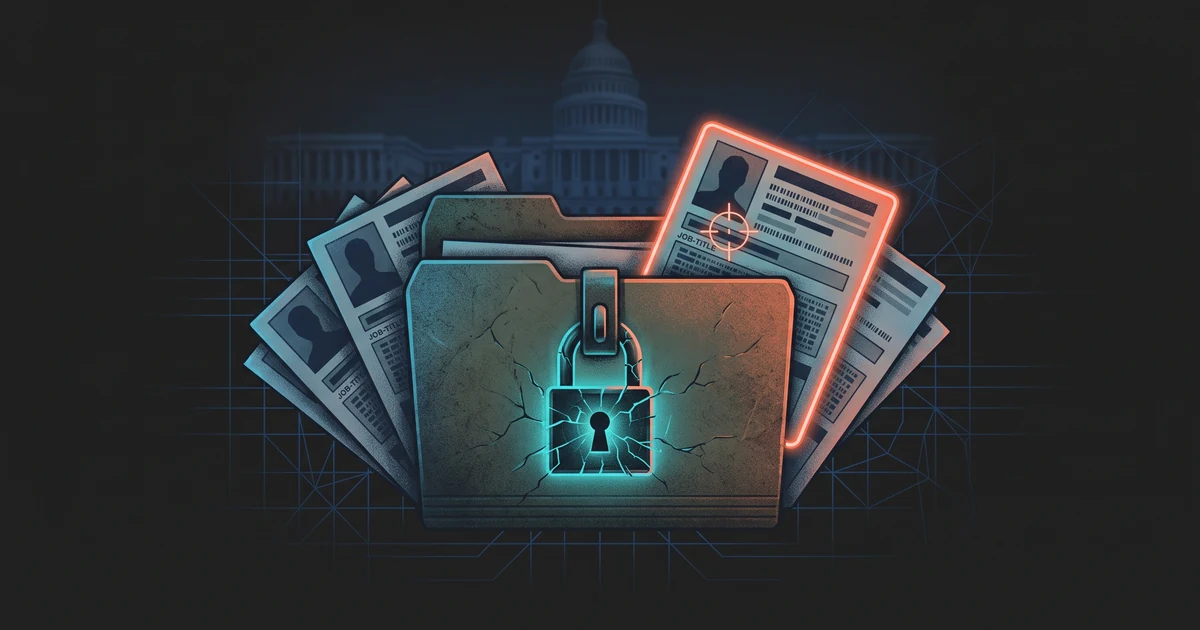
A list of job titles sounds boring. In the wrong hands, it is a shopping list.
TL;DR: The Pentagon is notifying about 2.8 million current and former military members that a Defense Manpower Data Center system was compromised, starting in October 2025 and running for months. The stolen records include Social Security numbers, addresses, and occupational specialty. A month earlier, the ShinyHunters extortion group claimed it stole FBI employee records. Together, Ars Technica says, they are one of the biggest potential espionage hauls since the 2015 OPM breach. If you got a letter, freeze your credit and expect targeted phishing.
Jump to a section:
- What happened in the Pentagon and FBI breaches?
- What data was exposed in the DMDC breach?
- Why does a list of job titles matter to attackers?
- How does this compare to the OPM breach?
- What has the government not told us?
- What should you do if you were affected?
- What can security teams learn from this government data breach?
It has been a rough month for federal cybersecurity, and the pattern matters more than either incident alone. Here is what we know, what we do not, and how stolen HR data turns into real-world risk.
What happened in the Pentagon and FBI breaches?
A system run by the Defense Manpower Data Center was compromised for months starting in October 2025, exposing records on 2.8 million people. A month earlier, ShinyHunters claimed it stole FBI employee records.
Per Ars Technica’s reporting, the Pentagon is notifying more than 2 million current and former military members that their personnel records were stolen during a monthslong compromise. Hackers gained access to a system operated by the Defense Manpower Data Center (DMDC), the office that collates Department of Defense personnel records. The Pentagon says the breach compromised the records of 2.8 million living individuals.
The second incident came first. Last month, the ransomware and extortion group ShinyHunters claimed it hacked FBI systems and stole records of thousands of current or former FBI employees. Reuters reported that the job titles in those records included ones related to investigating China or Russia.
The FBI has been public about its response. After Dutch police arrested a ShinyHunters-linked suspect (per Krebs on Security), FBI Cyber Division Assistant Director Brett Leatherman called on group members to turn themselves in: “The longer you stay in this, the more we learn about you.”
What data was exposed in the DMDC breach?
A notification letter lists Social Security numbers, names, addresses, sex, race, and occupational specialty. The DMDC handles more than 60 million Defense Department person records, so this is a slice of a far larger system.
The details come from a notification letter posted to Reddit, as cited by Ars Technica. Here is the field list and what each one enables:
| Field | What an attacker can do with it |
|---|---|
| Name + address | Mail scams, doorstep social engineering, physical surveillance |
| Social Security number | Open credit, file fraudulent tax returns, pass identity checks |
| Sex + race | Sharpen identity-theft profiles and verify stolen identities |
| Occupational specialty | Identify who does sensitive work, and where to aim |
Treat that table as an analysis, not a quote from the Pentagon. The government has confirmed the 2.8 million figure. The field-by-field impact is my reading of how this data gets used, and it is the part most coverage skips.
Why does a list of job titles matter to attackers?
Occupational specialty tells an intelligence service who does sensitive work. Combined with a name, address, and SSN, it turns a mass data dump into a targeting list for recruitment, surveillance, or spearphishing.
Think about what a normal criminal does with a stolen SSN: sells it, or opens a credit card. That is a volume game. A foreign intelligence service plays a different game. It does not want 2.8 million people. It wants the few hundred with the right specialty, access, or clearance, and a dataset that says who they are and where they live.
Ars Technica notes that occupational specialty “could be particularly valuable to foreign adversaries because it could help their intelligence agencies in identifying high-value military personnel.” The FBI side makes the same point sharper: employee records with job titles tied to investigating China or Russia are, by definition, a map of who works counterintelligence.
A good analogy is a building directory. The lobby listing “Suite 400, Law Firm” is public. A directory that also lists which employee holds the master key is a different document. Job specialty is the master key annotation.
The criminals have a separate problem for you. ShinyHunters says it has no plans to release the FBI data, but as Ars points out, the promises of a group that has extorted hundreds of organizations “mean very little.” Even if the group keeps its word, a copy of the data can move to a buyer.
How does this compare to the OPM breach?
The 2015 OPM breach was bigger and deeper: 22.1 million records, including fingerprints. These two incidents together are still one of the largest potential espionage hauls since then.
The OPM hack in 2015 gave China-state hackers 22.1 million records tied to government employees and others who underwent background checks, including fingerprint scans of millions of people, per Ars.
| 2015 OPM breach | 2026 DMDC breach | 2026 FBI breach (claimed) | |
|---|---|---|---|
| Scale | 22.1 million records | 2.8 million living individuals | Thousands of employees |
| Actor | China-state hackers | Not disclosed | ShinyHunters (claimed) |
| Notable data | Background checks, fingerprints | SSN, address, occupational specialty | Employee records, job titles |
The lesson of OPM was that personnel data is counterintelligence data. The lesson of this month is that the lesson did not fully stick: personnel systems are still a soft target a decade later.
What has the government not told us?
The Pentagon has not said how attackers got in, whether it contacted them, or whether ransom was demanded. It says the data was not misused but has not explained how it knows.
This is the part to read twice. Per Ars Technica, the Defense Department:
- Has not said how the attackers breached its security
- Has not said whether officials have had contact with those responsible
- Has not said whether they received ransom demands
- Has said the stolen data has not been misused, without explaining how it reached that conclusion
“No evidence of misuse” is a statement about detection, not about the data. Stolen records can sit for years before use, and espionage use is designed to be invisible. Until the how and the timeline are public, assume the data is in the hands of someone who can use it.
What should you do if you were affected?
Freeze your credit, check your reports, and treat unexpected calls, texts, and emails that mention the breach as suspect. Do not act on a message just because it mentions the breach.
If you received a letter or think your records may be in the DMDC data set:
- Freeze your credit at all three bureaus. The FTC explains that a freeze is free and blocks most new-account fraud. Our credit freeze walkthrough covers the steps.
- Pull your credit reports at AnnualCreditReport.com and look for accounts you did not open.
- Expect targeted phishing. Attackers who know your name, address, and job can write a convincing message. The FTC’s guidance on recognizing phishing is a good baseline, and our post on why modern phishing beats password resets shows how convincing these lures have become.
- Verify before you trust. If someone contacts you citing the breach, hang up and use a contact method from an official source, not one they give you.
- Report misuse at IdentityTheft.gov to get a personal recovery plan.
- Read your letter closely for any offered monitoring or enrollment steps, and use only the instructions in the mailed notice.
For service members and families, add one more rule: assume your specialty and location are known to adversaries, and apply normal operational security to what you share online.
What can security teams learn from this government data breach?
Treat HR and personnel systems as high-value targets. Inventory what they hold, limit who and what can reach them, and monitor for the slow, quiet access that a months-long breach implies.
The DMDC breach ran for months before disclosure. That is a detection gap, and it applies well beyond the Pentagon.
- Classify by aggregation, not by field. A name is low risk. A name plus address, SSN, and job specialty is high risk. Rate the combined record.
- Shrink dwell time. Months-long access means no one noticed anomalous queries or data movement. Alert on bulk reads from systems that rarely see them.
- Minimize what you store. If a system does not need occupational specialty, it should not hold it next to an SSN.
- Plan the notification story. The unanswered questions above are what the public asks first. Have those answers ready before an incident.
If you are mapping controls, this lines up with NIST CSF functions for detection and data protection, but the framework is secondary. The point is that “boring” HR data deserves the same protection as production secrets.
Bottom line: The most important field in this breach is not the Social Security number. It is the job specialty, because it tells an adversary which of the 2.8 million people are worth the effort. If you were affected, freeze your credit and treat every unsolicited message about the breach with suspicion.
Sources: Dan Goodin, Ars Technica, October 1, 2026; Reuters; Krebs on Security; FBI. Facts about the investigation are as reported by those outlets. This is not legal advice.